Small White Spots on Your Arms and Legs: What You Need to Know
Have you noticed tiny white or pale spots appearing on your arms or legs? They can look concerning, especially when they seem to appear out of nowhere. But small white spots do not automatically mean vitiligo or another serious disease.
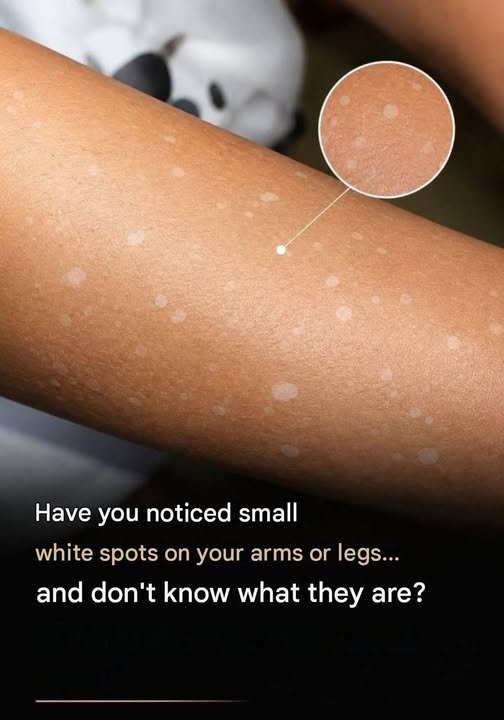
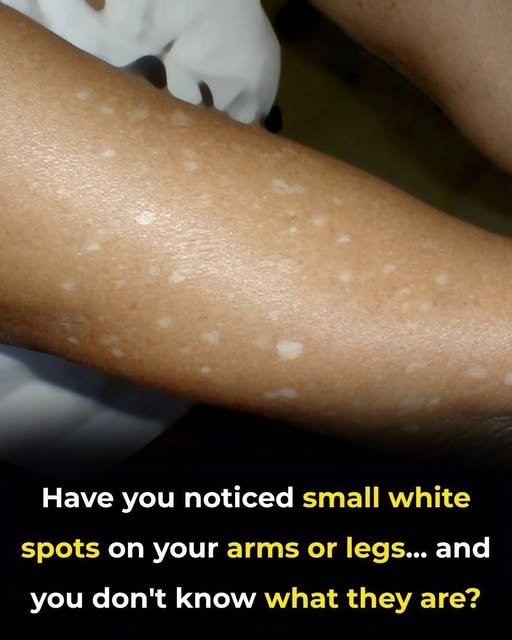
One common explanation is a harmless skin condition called idiopathic guttate hypomelanosis (IGH). It typically causes multiple small, flat, pale or white spots on sun-exposed areas such as the forearms and shins. Cleveland Clinic
What Is Idiopathic Guttate Hypomelanosis?
IGH is a common pigmentation condition in which small areas of skin have less melanin—the pigment responsible for skin color.
The spots are usually:
Small and round or oval
Flat and smooth
White or lighter than the surrounding skin
Not painful
Usually not itchy
Most common on the forearms and lower legs
More noticeable with increasing age and long-term sun exposure Cleveland Clinic
IGH is benign, meaning it isn’t considered dangerous to your health. Cleveland Clinic
Why Does It Happen?
Doctors don’t know exactly why IGH develops. Research suggests that several factors may contribute, including:
Sun Exposure
Repeated sun exposure over many years appears to play a role. This is one reason the spots are commonly found on the arms and legs. DermNet®
Aging
IGH becomes increasingly common with age. The number of spots may gradually increase over time. Cleveland Clinic
Genetics
Some people may be more prone to developing these spots because of inherited factors. DermNet®
Minor Skin Trauma
Repeated irritation or tiny injuries to the skin may also contribute in some people. Cleveland Clinic
Is It Vitiligo?
Not necessarily.
Vitiligo causes loss of skin pigment and can produce sharply defined white patches. However, several other conditions can create pale or white areas, including IGH and certain fungal infections. Cleveland Clinic
IGH typically consists of many small spots on sun-exposed arms and legs, while vitiligo can produce larger patches and may occur on different parts of the body. AAFP
A dermatologist can distinguish between these conditions by examining the skin and, when needed, using tools such as a Wood’s lamp.
Could It Be a Fungal Infection?
Another possibility is tinea versicolor, a common fungal/yeast-related skin condition.
Unlike typical IGH, tinea versicolor often affects the chest, back, neck, or upper arms and may produce fine scaling or itching. The spots can be lighter, darker, pink, or brown depending on the person’s skin tone. Académie Américaine de Dermatologie
This is important because tinea versicolor can be treated with antifungal medication, whereas IGH generally doesn’t require medical treatment.
Do White Spots Mean You Have a Vitamin Deficiency?
Not automatically.
It’s common online to see claims that white spots on the skin are proof of a calcium, vitamin, or mineral deficiency. The appearance of small white spots alone isn’t enough to make that diagnosis.
There are multiple possible causes of changes in skin pigmentation, so persistent or unexplained spots should be assessed rather than treated based on an internet claim. vitiligo.de
Can These Spots Be Prevented?
If the spots are related to sun exposure, protecting your skin from excessive UV exposure is a sensible measure for overall skin health.
Use sunscreen, wear protective clothing when appropriate, and avoid prolonged intense sun exposure.
However, there is no guaranteed way to prevent IGH because its exact cause isn’t fully understood. Cleveland Clinic
Do They Need Treatment?
Typical IGH is benign and usually doesn’t require treatment. Some people seek dermatological treatment because they dislike the appearance of the spots. Several treatments have been studied, but their effectiveness varies. Cleveland Clinic
It’s better not to start creams, antifungal medications, or other treatments simply based on a photograph or social-media post. The correct treatment depends on the actual diagnosis.
When Should You See a Dermatologist?
Consider getting the spots checked if they are:
New and rapidly appearing
Increasing significantly in size or number
Changing in appearance
Itchy, painful, scaly, or inflamed
Spreading into larger patches
Associated with other unexplained skin changes
A dermatologist can determine whether you’re dealing with IGH, vitiligo, tinea versicolor, post-inflammatory pigmentation changes, or another condition. vitiligo.de
The Bottom Line
Small white spots on the arms and legs are often harmless, and idiopathic guttate hypomelanosis is one common cause. These tiny spots are particularly common on sun-exposed areas and tend to become more noticeable with age. Cleveland Clinic
But a photograph alone can’t establish the diagnosis. If the spots are new, spreading, changing, or accompanied by other symptoms, a dermatologist can identify the cause and determine whether treatment is necessary.
This article is for general educational purposes and is not a substitute for an examination or personalized medical advice.