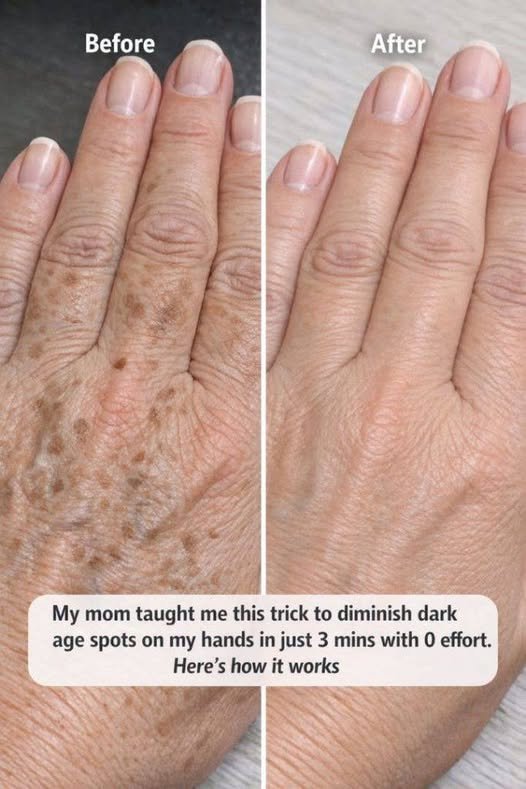
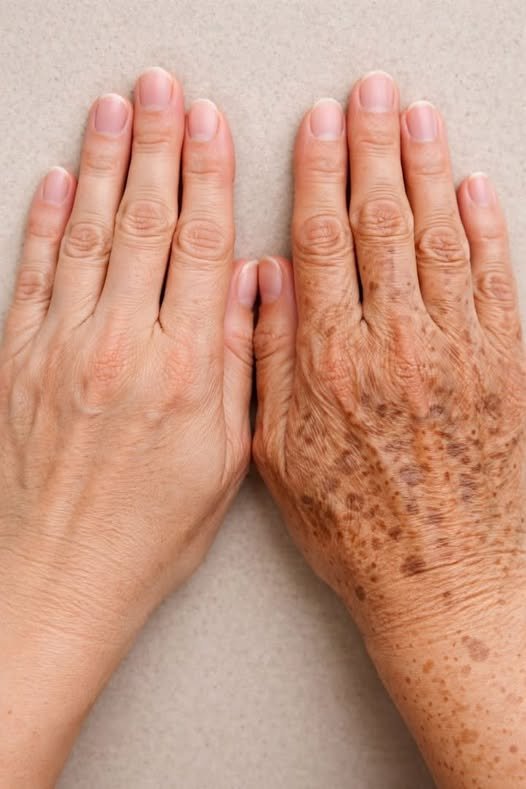
Dark spots on the backs of the hands are common, particularly as we get older. They are often called age spots or sun spots, and years of ultraviolet (UV) exposure can contribute to their development. Académie Américaine de Dermatologie
But there is one important problem with viral posts promising that a simple household trick can make age spots disappear in just three minutes: there is no good evidence that a home remedy can permanently remove true age spots that quickly.
What Are Age Spots?
Age spots, medically known as solar lentigines, are flat areas of increased pigmentation that commonly develop on sun-exposed skin, including the hands.
They are usually harmless, but not every dark spot on the hands is necessarily an age spot.
Some other skin conditions—including precancerous lesions and skin cancer—can resemble an age spot. That’s why dermatologists recommend having a new or changing dark spot evaluated before attempting to fade it yourself. Académie Américaine de Dermatologie
Why Do Hands Develop Dark Spots?
The main contributor is cumulative sun exposure.
UV radiation stimulates pigment production and contributes to long-term changes in the skin. Over many years, this can lead to uneven pigmentation, wrinkles and other signs of photoaging. Académie Américaine de Dermatologie
Hands are particularly exposed because they are often uncovered when we’re outside, driving, gardening, or doing everyday activities.
Can You Really Remove Them in 3 Minutes?
A quick improvement in the appearance of the skin may occur after washing, exfoliating, moisturizing, or changing the lighting in a photograph.
But that’s very different from actually removing pigmentation.
According to the American Academy of Dermatology, creams and lotions used for age spots generally require weeks or months of consistent use, while professional procedures can work faster. Académie Américaine de Dermatologie
So a dramatic “before and after” claiming that genuine age spots disappeared permanently after three minutes should be viewed cautiously.
What Treatments Actually Work?
Depending on the diagnosis, dermatologists may use several approaches.
1. Sunscreen
This is one of the most important steps.
Use a broad-spectrum, water-resistant sunscreen with SPF 30 or higher on exposed hands before going outdoors. Sun protection can help prevent additional spots and help maintain results after treatment. Académie Américaine de Dermatologie
2. Skin-Lightening Products
Some products can gradually fade dark spots. Depending on the person’s skin and diagnosis, dermatologists may recommend ingredients such as retinoids, vitamin C, glycolic acid, azelaic acid or kojic acid. Académie Américaine de Dermatologie
These aren’t instant solutions, and irritation can sometimes make pigmentation worse—particularly in darker skin tones.
3. Professional Treatments
For confirmed age spots, dermatologists may use:
Laser therapy
Chemical peels
Cryosurgery
Microdermabrasion
Other professionally selected treatments
These can work faster than topical products but also have potential side effects and aren’t appropriate for every type of pigmentation. Académie Américaine de Dermatologie
Be Careful With DIY “Whitening” Tricks
It’s tempting to try whatever is available in the kitchen, but harsh substances can irritate or burn the skin.
Irritation and inflammation can actually trigger more pigmentation, especially in people with darker skin tones. The AAD specifically advises against using potentially harmful skin-lightening products and warns against using liquid bleach on the skin. Académie Américaine de Dermatologie
Avoid aggressive scrubbing or applying concentrated acids, bleach, or other irritating substances to dark spots.
When Should You Get a Dark Spot Checked?
Make an appointment with a dermatologist if a spot:
The three-minute trick shown in viral posts should not be presented as a proven way to erase age spots.
If the marks really are sun-related age spots, improvement usually requires consistent sun protection and, when desired, an appropriate topical or professional treatment. Dermatologists can first confirm what the spots actually are before recommending a treatment. Académie Américaine de Dermatologie