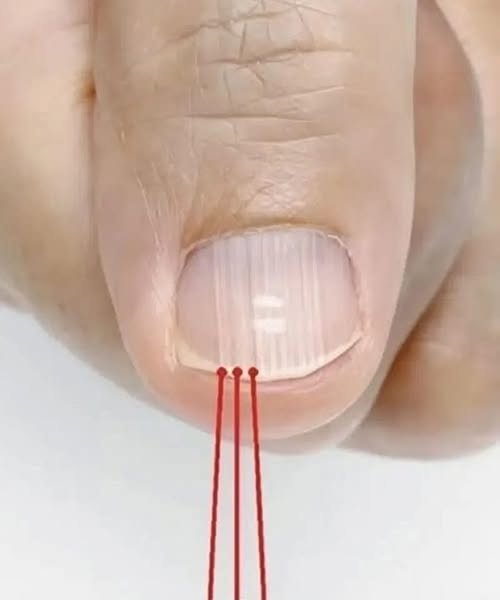
Do your fingernails split, peel, crack, or break easily?
You’re not alone. Brittle nails are common, and while they can sometimes be associated with an underlying health problem, they are often caused by everyday things such as repeated exposure to water, cleaning products, nail treatments, or simply getting older. nhs.uk
So before assuming your nails are warning you about a vitamin deficiency, it’s worth looking at the possible causes.
💅 Why Are My Nails Splitting?
1. Too Much Water and Cleaning Products
Frequent contact with water can cause nails to repeatedly swell and dry out. Over time, this can make them weaker and more likely to split or peel.
Cleaning products and detergents can make the problem worse.
The American Academy of Dermatology recommends wearing gloves when your hands are frequently exposed to water or cleaning products. Académie Américaine de Dermatologie
2. Aging
Nails naturally change as we get older.
They may grow more slowly and become thinner, drier, or easier to break. Brittle nails are particularly common with increasing age. nhs.uk
3. Manicures and Nail Products
Frequent use of:
Gel manicures
Acrylic nails
Nail polish removers
Nail hardeners
Aggressive filing or buffing
can contribute to nail damage.
Repeated trauma to the nail can eventually cause splitting or separation from the nail bed. Cleveland Clinic
4. Nail Fungus
A fungal infection can cause nails to become thick, brittle, discolored, cracked, or crumbly.
Although toenails are affected more frequently, fungal infections can also affect fingernails. Cleveland Clinic
If several nails are changing color and becoming thicker or increasingly fragile, it’s worth having them examined rather than assuming the problem is nutritional.
🥗 Could It Be a Nutritional Deficiency?
Sometimes.
Certain nutritional deficiencies can affect nail appearance. Iron deficiency, for example, can cause characteristic nail changes, including thin, spoon-shaped nails called koilonychia. nhs.uk
Other nutritional problems may also affect nail strength, but brittle nails alone don’t tell you which nutrient—if any—is missing.
That’s why taking multiple supplements without knowing the cause isn’t necessarily the best solution.
🦋 What About the Thyroid?
Thyroid disorders can sometimes be associated with brittle or abnormal nails.
For example, hypothyroidism can be associated with thick, brittle nails that break more easily. Cleveland Clinic
But again, brittle nails by themselves aren’t enough to diagnose a thyroid disorder.
If you also have symptoms such as unexplained fatigue, major weight changes, temperature sensitivity, hair changes, or other persistent symptoms, talk with a healthcare professional.
🧴 How Can You Make Brittle Nails Stronger?
Try these simple habits:
Keep nails relatively short
Shorter nails are less likely to catch on objects and split.
Moisturize regularly
Apply hand cream or moisturizer to your hands, nails and surrounding skin.
Wear gloves
Use protective gloves when washing dishes, cleaning, or spending a lot of time with your hands in water. nhs.uk
Don’t pick or bite your nails
Repeated trauma can damage the nail and surrounding skin.
Give damaged nails a break
If your nails are repeatedly splitting, consider taking a break from gel, acrylics and other aggressive nail treatments.
Don’t aggressively cut the cuticles
The cuticle helps protect the area where the nail grows.
🚨 When Should You See a Doctor?
It’s worth getting your nails checked if the changes are persistent, severe, or unexplained, particularly if you notice:
Sudden changes in several nails
Significant discoloration
Nails becoming thick or crumbly
Nails separating from the skin underneath
Pain, redness or swelling around the nail
Repeated infections
Spoon-shaped nails
Changes accompanied by other unexplained symptoms
The NHS recommends medical evaluation when a nail changes shape or color or falls off without an obvious reason. nhs.uk
The Bottom Line
Brittle nails don’t automatically mean your body is missing a vitamin.
For many people, the cause is much simpler: repeated water exposure, cleaning chemicals, nail treatments, trauma, dryness, or aging.
However, persistent nail changes can sometimes be associated with conditions such as iron deficiency, thyroid disorders, psoriasis, or fungal infections, so unusual changes shouldn’t simply be ignored. nhs.uk
Your nails can provide clues—but they can’t diagnose the problem by themselves. If your nails have suddenly changed or keep breaking despite good care, a healthcare professional can help identify the real cause.