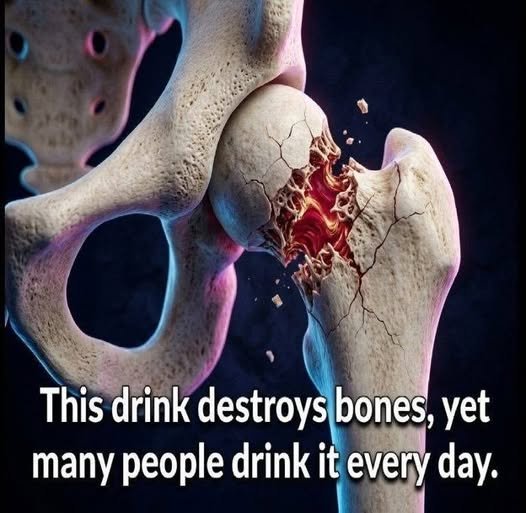
A viral image claims that certain everyday drinks can “destroy your bones.” While that wording is far too dramatic, some beverages can contribute to poorer bone health when consumed frequently or in large amounts.
The important point is that no single drink suddenly destroys healthy bones. Bone health depends on your overall diet, calcium and vitamin D intake, physical activity, age, hormones, medications and other factors.
Here are five types of drinks worth limiting if you’re concerned about maintaining strong bones.
1. Cola and Other Dark Soft Drinks
Cola is the beverage with some of the most frequently discussed evidence regarding bone health.
Research from the Framingham Osteoporosis Study found that greater cola consumption was associated with lower hip bone mineral density in women, although the study was observational and could not prove that cola caused the bone loss. Interestingly, the association was not seen with non-cola carbonated drinks. PubMed
Possible explanations include the overall nutritional pattern of people who consume large amounts of soft drinks and the fact that cola can replace calcium-rich beverages in the diet.
Better choice: water, milk or a calcium-fortified unsweetened beverage.
2. Alcohol
Heavy alcohol consumption is a well-established concern for bone health.
Excessive alcohol intake can affect bone metabolism, interfere with nutrition and increase the risk of falls and fractures. The International Osteoporosis Foundation notes that more than two units of alcohol per day can increase fragility-fracture risk. Fondation Ostéoporose
This doesn’t mean that one occasional drink will “damage your bones.” The concern is particularly with regular or heavy consumption.
3. Energy Drinks and Very High-Caffeine Beverages
Caffeine itself isn’t automatically bad for your bones.
However, very high caffeine intake may increase calcium losses, and the concern becomes greater when someone has a low-calcium diet. The International Osteoporosis Foundation recommends moderation rather than complete avoidance. Fondation Ostéoporose
Energy drinks can also contain large amounts of caffeine and added sugar.
The bigger issue is excessive intake—not an occasional cup of coffee or tea.
4. Sugar-Sweetened Soft Drinks
Regular sodas and other sugar-sweetened beverages can contribute to an overall dietary pattern that is less favorable for bone health.
A systematic review found associations between high consumption of sugar-sweetened beverages and measures of bone health, although the evidence does not establish that sugar-sweetened drinks directly “destroy” bone. PubMed Central (PMC)
Another important issue is replacement: if someone drinks several sugary beverages every day instead of consuming nutritious foods or calcium-rich drinks, their overall nutrient intake may suffer.
5. Sugary Coffee and Other Sweetened Drinks
Coffee itself doesn’t need to be eliminated for healthy bones.
The concern is when coffee-based drinks become large sources of added sugar and caffeine, especially when consumed several times a day.
Moderate caffeine consumption is generally compatible with a healthy diet. The International Osteoporosis Foundation specifically recommends moderation rather than avoiding caffeine altogether. Fondation Ostéoporose
A plain or lightly sweetened coffee with a balanced diet is very different from regularly consuming oversized, sugar-heavy coffee beverages.
What About Carbonated Water?
Here’s an important correction to a common internet claim:
Carbonation itself does not automatically weaken your bones.
Evidence has been much more concerning for cola and certain sugary soft drinks than for carbonated water. In the Framingham study, non-cola carbonated beverages were not associated with lower bone mineral density. PubMed
So you don’t need to avoid plain sparkling water simply because it contains bubbles.
What Should You Drink for Stronger Bones?
Instead of focusing only on what to avoid, consider what you’re getting enough of.
Good options include:
🥛 Milk
An important source of calcium and protein.
🌱 Fortified plant-based beverages
Some fortified soy, almond and other plant-based drinks can provide calcium and vitamin D. Check the nutrition label.
💧 Water
The simplest everyday choice for hydration.
☕ Coffee or tea in moderation
These don’t automatically have to be removed from a healthy diet.
Don’t Forget the Bigger Picture
Drinks are only one part of bone health.
Your bones also need adequate calcium, vitamin D and protein, along with regular weight-bearing and muscle-strengthening activity. Clinical guidelines emphasize physical activity as an important component of fracture prevention. PubMed Central (PMC)
The Bottom Line
There isn’t a single beverage that simply “destroys” bones.
However, it’s sensible to limit excessive alcohol, cola and sugary soft drinks, very high-caffeine beverages, and heavily sweetened coffee or other drinks—especially if they replace more nutritious choices.
And there’s an important distinction:
Moderation matters. You don’t have to fear every cup of coffee or every carbonated drink.
A balanced diet, adequate calcium and vitamin D, regular exercise and avoiding excessive alcohol are much more important for protecting your bones over the long term. Fondation Ostéoporose