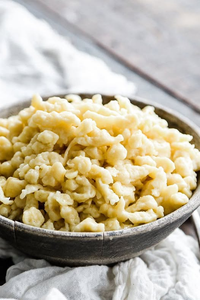
Traditional Hungarian Noodles (Nokedli) – Soft, Homemade Dumplings in Just 15 Minutes
There is something special about a bowl of homemade Hungarian nokedli. These little, tender dumplings are made with simple pantry ingredients, yet they bring the comforting taste of traditional Hungarian cooking straight to the table.
Known as nokedli or galuska in Hungarian, these small dumplings are similar to German spaetzle. They are especially popular alongside Hungarian Chicken Paprikash, beef stew, and other dishes with rich, flavorful sauces. <Cite refs={[“turn188501search9″,”turn188501search1”]}/>
The best part? You do not need a complicated recipe or expensive ingredients. With flour, eggs, water, and salt, you can make a delicious homemade side dish in approximately 15 minutes.
Serve them with melted butter for a simple comfort-food dish, or toss them with eggs to make the beloved Hungarian meal known as tojásos nokedli.
Ingredients
2 cups (300 g) all-purpose flour
2 large eggs
¾ cup (180–200 ml) water, approximately
1 teaspoon salt, or to taste
Salt for the cooking water
2 tablespoons butter, for serving
Instructions
Step 1: Bring the Water to a Boil
Fill a large pot with water, add salt, and bring it to a boil while you prepare the dough.
Using a large pot gives the dumplings enough room to cook without sticking together.
Step 2: Mix the Ingredients
Place the flour and salt in a large mixing bowl. Add the eggs and gradually pour in the water while stirring with a wooden spoon.
Mix until you have a thick, sticky dough. The mixture should be soft enough to pass through a nokedli maker or a large-holed colander, but not so thin that it runs like ordinary pancake batter.
Add the water gradually because different types of flour absorb different amounts.
Step 3: Prepare the Nokedli Maker
Place a nokedli or spaetzle maker over the pot of boiling water.
If you do not have one, use a suitable large-holed colander or carefully cut small pieces of dough from a cutting board into the water.
Take care when working over boiling water to avoid splashes.
Step 4: Shape the Dumplings
Work in batches. Push the dough through the holes of the nokedli maker directly into the boiling water.
Stir gently if needed to prevent the dumplings from sticking together or to the bottom of the pot.
Step 5: Cook Until Tender
Let the dumplings cook for approximately 2–4 minutes, depending on their size.
They will generally rise toward the surface as they cook, but floating alone does not guarantee that every piece is fully cooked. Check that the dumplings are tender and cooked through before removing them.
Lift them out with a slotted spoon or drain them carefully in a colander.
Step 6: Add Butter and Serve
Transfer the cooked nokedli to a serving bowl and toss gently with melted butter.
Serve immediately while warm and soft. The dumplings are especially delicious when they soak up the sauce from a traditional Hungarian stew.
Tips for Perfect Hungarian Nokedli
Add water gradually. The dough should be thick and sticky, not watery.
Cook in batches. Adding too much dough at once can lower the water temperature and cause the dumplings to clump together.
Avoid overcooking. Small nokedli cook quickly and can become too soft if left in the water for too long.
Use a little butter. Tossing the drained dumplings with butter helps keep them from sticking and adds a pleasant flavor.
Serve immediately. Fresh nokedli have their best texture when freshly cooked.
What to Serve With Nokedli
Traditional Hungarian nokedli is a versatile side dish. Try it with:
Hungarian Chicken Paprikash
Beef goulash or Hungarian-style beef stew
Pork or mushroom paprikash
Rich onion and paprika gravy
A simple egg-and-nokedli dish known as tojásos nokedli
For a quick meal, toss the cooked dumplings with beaten eggs in a skillet until the eggs are fully cooked. Serve with a fresh green salad for a simple Hungarian-inspired lunch.
Final Thoughts
Hungarian nokedli proves that the simplest ingredients can create something wonderfully comforting. These soft, homemade dumplings are quick to prepare, easy to customize, and perfect for soaking up flavorful sauces.
Whether you serve them with chicken paprikash, hearty stew, or eggs, this traditional recipe deserves a place in your family’s collection.
Save this recipe and share it with someone who loves homemade Hungarian comfort food!