Symptoms of a Blood Clot That Many People Don’t Recognize
A blood clot can develop in a vein without obvious warning signs. In some cases, it causes swelling or pain in a leg or arm. In others, a clot can travel to the lungs and become a life-threatening emergency.
Knowing the symptoms of a blood clot can help you recognize when to seek medical care. However, symptoms alone cannot confirm a clot, and some people with deep vein thrombosis have no noticeable symptoms at all. <Cite refs={[“turn935181search1″,”turn935181search3”]}/>
What Is a Blood Clot?
A blood clot is a mass of blood that has changed from a liquid into a gel-like or solid state. Clotting is a normal process that helps stop bleeding after an injury.
Problems arise when a clot forms inside a blood vessel and blocks blood flow. A clot in a deep vein is called deep vein thrombosis (DVT). It most often occurs in the leg, but it can also develop in an arm or another part of the body.
If part of a DVT breaks away and travels to the lungs, it can cause a pulmonary embolism (PE), which requires immediate medical attention. <Cite refs={[“turn935181search1″,”turn935181search0”]}/>
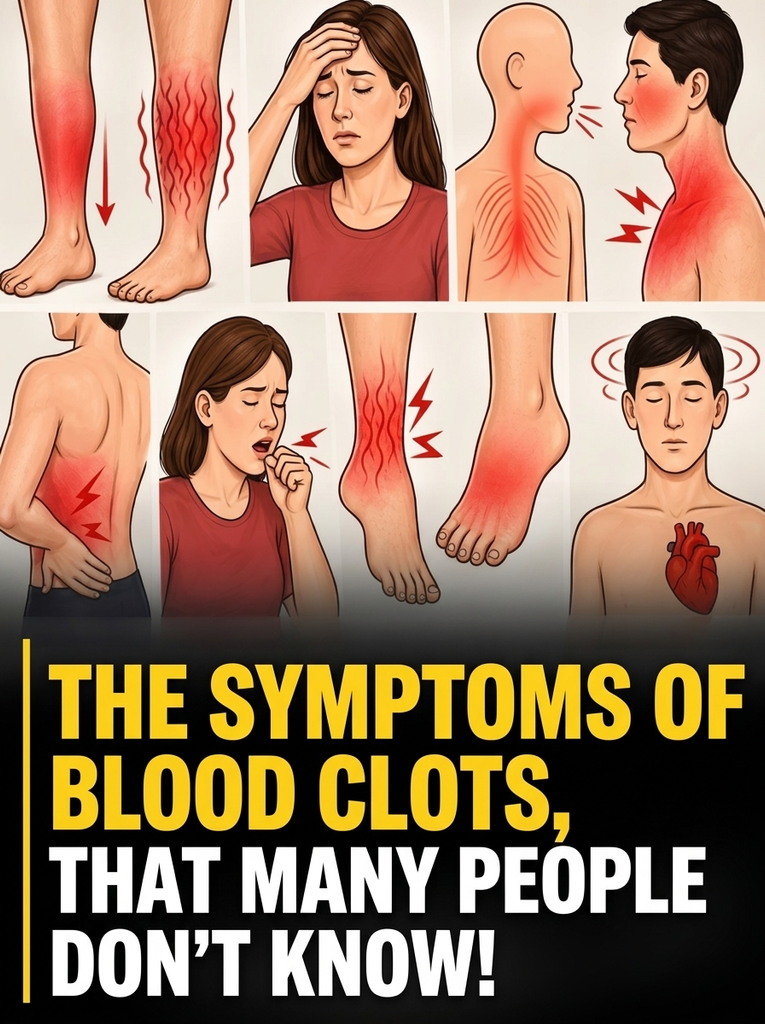
7 Possible Symptoms of a Blood Clot
1. Swelling in One Leg or Arm
Unexplained swelling in one leg or arm can be a sign of deep vein thrombosis. You may notice that one calf, ankle, thigh, or arm looks larger than the other.
Swelling can develop over hours or days and may occur with pain or warmth. Although many other conditions can cause swelling, new swelling affecting just one limb should be assessed promptly.
2. Pain or Tenderness
A blood clot in a deep vein can cause pain, tenderness, cramping, or soreness, particularly in the calf or thigh.
The discomfort may feel similar to a muscle strain, but it can occur without an obvious injury. Do not assume unexplained leg pain is simply caused by exercise or standing for too long.
3. Warmth or Redness of the Skin
The skin around an affected area may feel warmer than the surrounding skin and may appear red or discolored.
These changes are not unique to blood clots. Skin infections, inflammation, and other conditions can produce similar symptoms, so medical assessment is important.
4. Sudden Shortness of Breath
Unexpected difficulty breathing can be a sign that a blood clot has traveled to the lungs.
Shortness of breath may occur suddenly, even when there are no obvious symptoms in the legs. Sudden or unexplained difficulty breathing is a medical emergency, especially when accompanied by chest pain, faintness, or a rapid heartbeat. <Cite refs={[“turn935181search1″,”turn935181search5”]}/>
5. Chest Pain That Gets Worse With Breathing
A pulmonary embolism may cause sharp chest pain that becomes worse when taking a deep breath or coughing.
The pain can sometimes be mistaken for a muscle problem or another chest condition. Do not attempt to determine the cause at home if you suspect a blood clot.
Seek emergency medical care for sudden, unexplained chest pain, particularly if you also have breathing difficulties.
6. A Fast or Irregular Heartbeat
A pulmonary embolism can cause a faster-than-normal heartbeat or a sensation that the heart is racing.
This symptom has many possible causes, including anxiety, dehydration, fever, and heart rhythm problems. However, if it occurs alongside sudden breathlessness, chest pain, or faintness, emergency assessment is essential.
7. Coughing Up Blood or Feeling Faint
Coughing up blood can occur when a blood clot affects the lungs. Some people may also experience dizziness, lightheadedness, or fainting.
These symptoms can indicate a serious medical problem and should never be ignored.
Call your local emergency number immediately if you have difficulty breathing, chest pain with suspected pulmonary embolism, cough up blood, or faint suddenly. Do not drive yourself if you are experiencing severe symptoms.
Who Is at Higher Risk of Developing a Blood Clot?
A blood clot can affect people of different ages, including those without obvious risk factors. However, certain circumstances can increase the likelihood of developing one.
Risk factors include:
Recent surgery or hospitalization.
Prolonged bed rest or limited movement.
Sitting for long periods during travel.
Previous blood clots or a family history of clotting disorders.
Certain cancers and cancer treatments.
Pregnancy and the period after childbirth.
Estrogen-containing contraceptives or hormone replacement therapy.
Older age and certain chronic medical conditions.
Having one or more risk factors does not mean that a blood clot will definitely occur. It does mean that recognizing symptoms and discussing prevention with a healthcare professional may be especially important. <Cite refs={[“turn935181search0″,”turn935181search8”]}/>
How Can You Help Reduce Your Risk?
Although not every blood clot can be prevented, several measures may help reduce the risk:
Move regularly. If you sit for long periods, get up and walk when possible.
Exercise your legs during long journeys. Move your ankles and tighten and release your calf muscles while seated.
Follow post-surgery instructions. Your healthcare team may recommend early movement or medication to prevent clots.
Discuss your personal risk. Tell your clinician if you have had a previous clot or have a strong family history.
Use prescribed preventive medication as directed. Do not start or stop blood thinners on your own.
For long trips, the CDC advises getting up and walking every one to two hours when possible. People with additional risk factors should ask their healthcare professional whether they need extra preventive measures. <Cite refs={[“turn935181search2″,”turn935181search0”]}/>
How Is a Blood Clot Diagnosed?
Symptoms alone cannot reliably confirm or rule out a blood clot. Other conditions can produce similar signs, including muscle injuries and skin infections.
Depending on the suspected location of the clot and your medical history, a healthcare professional may recommend blood tests or imaging. Ultrasound is commonly used to assess suspected DVT, while other imaging tests may be needed to investigate a pulmonary embolism.
Early assessment matters because effective treatments are available, but the appropriate treatment depends on the diagnosis and the individual’s health. <Cite refs={[“turn935181search3″,”turn935181search1”]}/>
Frequently Asked Questions
Can you have a blood clot without symptoms?
Yes. Some people with deep vein thrombosis have no noticeable symptoms. This is one reason it is important to understand your risk factors and seek medical advice when concerns arise.
Does a blood clot always cause leg pain?
No. A clot may cause swelling, tenderness, warmth, or discoloration, but symptoms vary. Some clots cause no obvious symptoms, and a clot in the lungs may occur without noticeable leg symptoms.
Is one swollen leg always a sign of a blood clot?
No. There are several possible causes of one-sided swelling. However, new, unexplained swelling—particularly with pain, tenderness, or warmth—needs prompt medical assessment to rule out DVT.
Can a blood clot go away on its own?
The body can gradually break down some clots, but waiting to see whether a suspected clot disappears is dangerous. A clot can cause serious complications, so suspected DVT or pulmonary embolism requires medical evaluation.
When should I seek emergency help?
Seek emergency medical care for sudden difficulty breathing, chest pain with suspected pulmonary embolism, coughing up blood, or fainting. For new, unexplained swelling or pain in one leg or arm, seek prompt medical assessment.
Final Thoughts
Blood clots do not always produce obvious symptoms. Unexplained swelling, pain, warmth, or discoloration in one limb may indicate deep vein thrombosis, while sudden breathlessness, chest pain, coughing up blood, or fainting may indicate a pulmonary embolism.
Recognizing these warning signs can help people seek care sooner. If you suspect a blood clot, do not wait for symptoms to worsen or try to diagnose it yourself.
Medical Disclaimer
This article is for general educational purposes only and is not a substitute for professional medical advice, diagnosis, or treatment. Suspected blood clots require appropriate medical assessment.