Apply This 1 Solution to Your Hands? What Actually Helps Age Spots, Sun Damage, and Crepey Skin
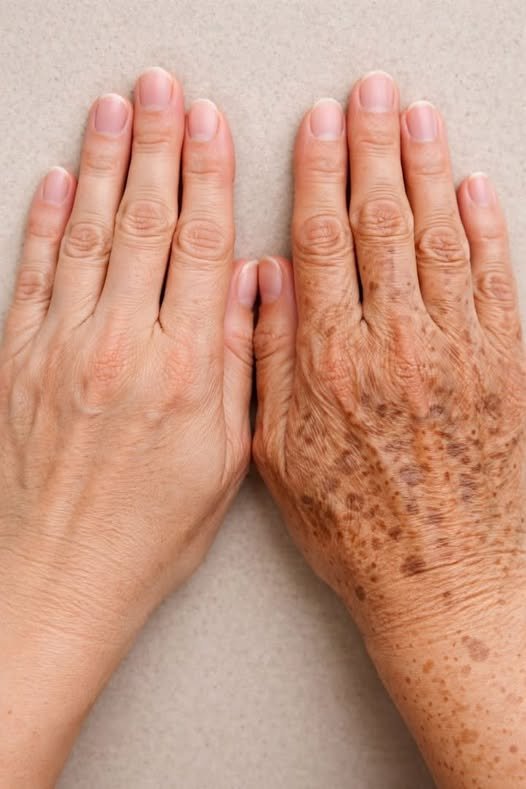
Dark spots, fine lines, and crepey skin on the backs of the hands are common signs of photoaging—skin changes that develop after years of sun exposure. The hands are especially vulnerable because they are exposed to sunlight so frequently. (Académie Américaine de Dermatologie)
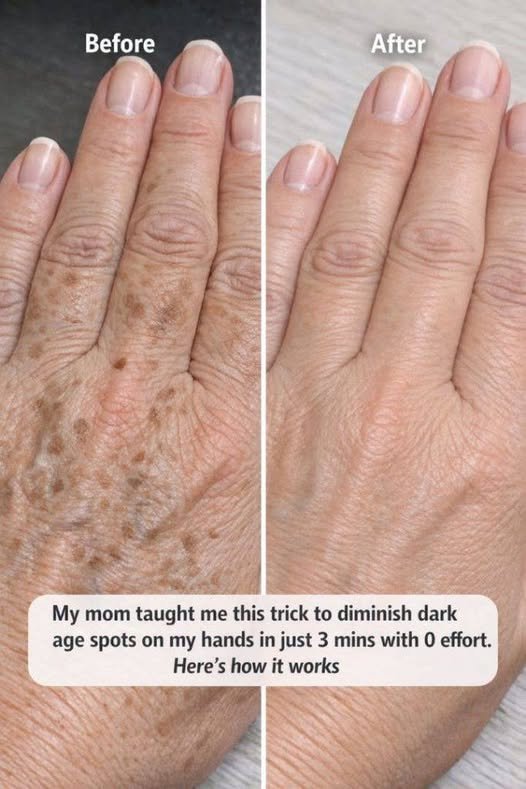
But there is an important catch: there is no single homemade solution that can safely erase age spots, sun damage, and crepey skin overnight. Effective treatment depends on what is actually causing the discoloration and changes in texture.
What Can Actually Help?
1. Start With SPF 30+ Every Day
If you want to improve the appearance of your hands, sun protection is one of the most important steps.
Apply a broad-spectrum, water-resistant SPF 30 or higher to the backs of your hands before going outdoors. Regular sunscreen use can help prevent additional sun damage, age spots, and premature skin aging. (Académie Américaine de Dermatologie)
Reapply when appropriate, especially after washing your hands or spending extended time outdoors.
2. Moisturize Your Hands Regularly
Dry skin can make wrinkles and crepey texture appear more noticeable.
Apply a moisturizing hand cream after washing your hands and whenever the skin feels dry. Dermatologists recommend regular moisturization because it helps trap water in the skin and can temporarily make the skin appear smoother and fuller. (Académie Américaine de Dermatologie)
3. Consider Retinol for Texture and Dark Spots
A hand lotion containing retinol may help improve the appearance of fine lines, uneven pigmentation, and skin texture over time. The American Academy of Dermatology lists retinol/retinoid products among options used to improve signs of sun damage and aging. (Académie Américaine de Dermatologie)
Start gradually because retinoids can cause dryness and irritation, and they can increase sensitivity to sunlight.
What About Lemon, Baking Soda, or Vinegar?
You may see social-media recipes recommending lemon juice, baking soda, vinegar, or other strong household ingredients for dark spots.
These aren’t necessary, and irritating the skin can actually make discoloration worse. Instead, use products formulated for skin and focus on consistent sun protection and moisturization.
Professional Treatments Can Work Faster
If the spots are true solar lentigines, dermatologists have several treatment options, including:
Laser treatment
Intense pulsed light (IPL)
Chemical peels
Cryotherapy
Microdermabrasion
Prescription creams or retinoids
Some procedures can produce faster results than creams, but they also have potential side effects and should be selected after a proper skin examination. (Académie Américaine de Dermatologie)
Don’t Assume Every Dark Spot Is an Age Spot
This is particularly important.
A dark or changing spot on the hand can sometimes resemble an age spot but may represent another skin condition, including actinic keratosis or skin cancer. The American Academy of Dermatology recommends having suspicious spots evaluated before trying to remove them yourself. (Académie Américaine de Dermatologie)
See a dermatologist if a spot is new, rapidly changing, very dark or black, irregular, bleeding, crusting, or noticeably different from the others. (Mayo Clinic)
During the day: Reapply sunscreen after prolonged outdoor exposure or frequent hand washing.
Evening: Wash → moisturizing hand cream → retinol product if appropriate and tolerated.
Consistency matters much more than a viral “one-minute” trick.
Final Thoughts
There isn’t one miracle solution that instantly removes age spots and reverses all sun damage. But a combination of daily SPF 30+, regular moisturizing, and appropriate evidence-based treatments can gradually improve the appearance of aging hands. (Académie Américaine de Dermatologie)
And before treating any prominent or changing dark spot, make sure it really is an age spot rather than another skin condition. (Académie Américaine de Dermatologie)