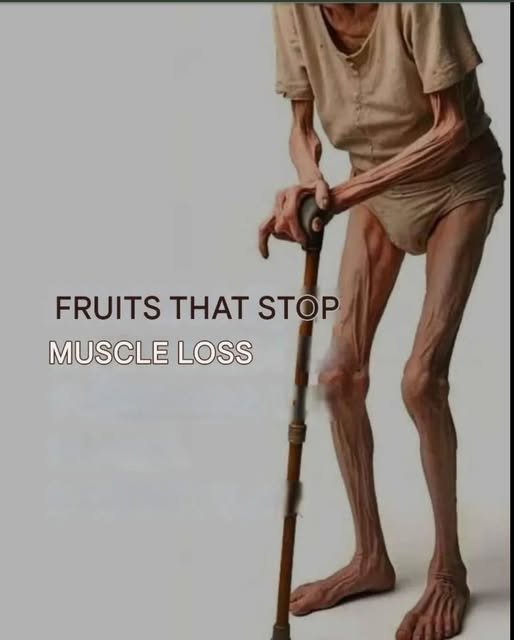
Muscle loss becomes more common with age, but it isn’t simply something that must be accepted without action. Regular resistance exercise, adequate protein, sufficient calories, and a balanced diet can all help support muscle maintenance and physical function.
Fruit can certainly be part of a healthy diet, but it is important to correct one common social-media claim: no individual fruit can “stop” muscle loss by itself. Fruit provides carbohydrates, fiber, vitamins, minerals, and antioxidants, while muscle tissue needs enough protein and resistance training to grow and remain strong.
🍌 1. Bananas
Bananas provide carbohydrates and potassium, making them a convenient food around exercise. Carbohydrates help provide energy for physical activity, while potassium contributes to normal muscle and nerve function.
Try adding sliced banana to Greek yogurt, oatmeal, or a smoothie.
🍊 2. Oranges
Oranges provide vitamin C, carbohydrates, water, and fiber. Vitamin C is important for collagen production and normal connective-tissue health.
Whole oranges are generally preferable to juice because they provide more fiber and are more filling.
🫐 3. Berries
Strawberries, blueberries, raspberries, and other berries provide fiber and a variety of plant compounds.
They make an easy addition to yogurt, oatmeal, cottage cheese, or a protein-rich smoothie.
🥝 4. Kiwi
Kiwi provides vitamin C, fiber, potassium, and other nutrients. It can be a useful addition to an overall balanced diet, particularly when paired with a source of protein.
🍉 5. Watermelon
Watermelon contains plenty of water and provides carbohydrates and potassium. It’s a refreshing option, particularly after physical activity or in hot weather.
However, because watermelon is relatively low in protein, it shouldn’t be considered a muscle-building food on its own.
🥑 6. Avocado
Although technically a fruit, avocado is nutritionally different from many sweet fruits. It provides healthy unsaturated fats, fiber, potassium, and calories that can help contribute to an adequate overall diet.
Adding avocado to eggs, whole-grain toast, salads, or beans can make meals more nutrient-dense.
💪 The Bigger Picture: Protein Matters
If your goal is maintaining or building muscle, protein is much more directly relevant than choosing a particular fruit.
Good protein sources include:
Eggs
Greek yogurt
Milk
Fish
Chicken
Lean meat
Beans and lentils
Tofu and other soy foods
Cottage cheese
For older adults, maintaining adequate protein intake becomes particularly important because the body can become less responsive to dietary protein with age.
🏋️ Don’t Forget Resistance Exercise
Nutrition works best alongside physical activity.
Resistance exercises such as:
Squats or sit-to-stands
Resistance-band exercises
Weight training
Step-ups
Push-ups or modified push-ups
can provide the stimulus muscles need to maintain strength and function.
Older adults should choose exercises appropriate for their abilities and consider professional guidance if they have significant mobility problems or medical conditions.
🥗 A Simple Muscle-Supporting Meal
Instead of focusing on a single “miracle” food, build meals around several components:
Protein + vegetables/fruit + whole grains or other carbohydrates + healthy fats
For example:
Greek yogurt + berries + banana + nuts
This combination provides protein, carbohydrates, fiber, and healthy fats in one simple meal.
The Bottom Line
Fruits are excellent foods to include in a balanced diet, but they don’t independently prevent or reverse age-related muscle loss. Maintaining muscle requires a combination of adequate nutrition—especially protein—plus regular resistance exercise and sufficient overall energy intake.
If you’re experiencing noticeable muscle loss, weakness, difficulty climbing stairs, or repeated falls, speak with a healthcare professional. Significant muscle loss can sometimes be related to inadequate nutrition or an underlying medical condition and deserves proper evaluation.
This article is for general educational purposes and is not a substitute for individualized medical or nutritional advice.