🧂 A Single Ingredient to Combat Bone Pain, Diabetes, Anxiety, Depression, and Constipation? Here’s the Truth About Salt
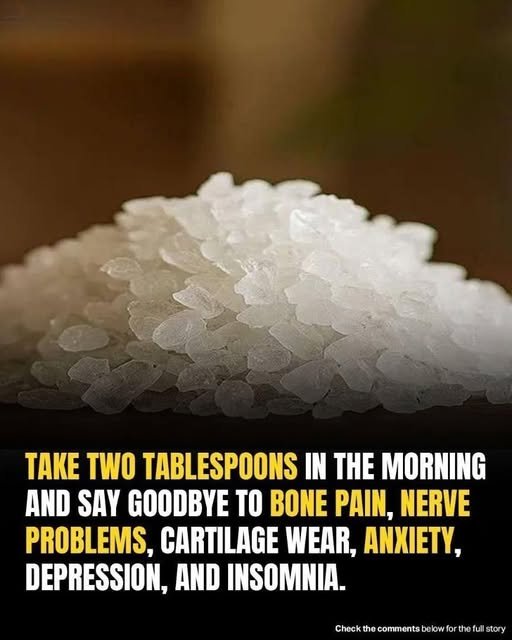
A viral post claims that taking two tablespoons of salt every morning can make bone pain, nerve problems, cartilage wear, anxiety, depression, and insomnia disappear.
It sounds like a simple natural remedy—but this is not a safe or evidence-based treatment.
The ingredient shown is most likely salt, and while sodium is an essential mineral, taking two tablespoons of salt as a daily remedy could provide an extremely large amount of sodium.
The World Health Organization recommends that adults consume less than 5 grams of salt per day—about one teaspoon total from all foods and drinks—not two tablespoons as a supplement. Organisation mondiale de la santé
🧂 Salt Is Necessary—But More Is Not Better
Your body needs sodium for important functions including nerve transmission, fluid balance, and normal cellular function.
But excessive sodium intake can raise blood pressure and increase cardiovascular and kidney-related health risks. Organisation mondiale de la santé
That’s why the idea of deliberately eating large amounts of salt every morning is concerning.
What about “two tablespoons”?
Two tablespoons is far beyond the WHO’s recommended daily salt intake.
And remember: the 5-gram recommendation refers to total salt consumed throughout the day, including salt already present in bread, sauces, processed foods, cheese, snacks, and prepared meals. Organisation mondiale de la santé
🦴 Can Salt Treat Bone Pain?
No.
There is no established evidence that taking spoonfuls of salt treats bone pain or cartilage wear.
Persistent bone or joint pain can have many causes, including arthritis, injury, inflammation, osteoporosis-related problems, nerve conditions, or other medical issues.
Adding excessive sodium doesn’t address the underlying cause.
If bone or joint pain is persistent, severe, or worsening, the important step is determining why it is happening, rather than trying a high-salt remedy.
🩸 Can Salt Cure Diabetes?
Absolutely not.
Salt does not replace diabetes treatment, insulin, prescribed medications, appropriate nutrition, physical activity, or blood-glucose monitoring.
In fact, people with diabetes can have additional cardiovascular and kidney considerations, making excessive sodium intake particularly inappropriate as a “cure.”
Never stop prescribed diabetes medication because of a social-media remedy.
🧠 What About Anxiety and Depression?
There is no good evidence that swallowing tablespoons of salt is a treatment for anxiety or depression.
Mental-health conditions can have complex causes and may benefit from professional evaluation, psychotherapy, medication when appropriate, lifestyle changes, or a combination of treatments.
A kitchen ingredient cannot be presented as a universal replacement for evidence-based care.
😴 Can Salt Cure Insomnia?
Again, there is no established evidence that eating two tablespoons of salt before or after waking will cure insomnia.
Poor sleep can be related to stress, medications, caffeine, sleep apnea, pain, medical conditions, mood disorders, or an irregular sleep schedule.
The appropriate solution depends on the cause.
🚽 What About Constipation?
This is another area where the viral claim can be misleading.
Salt is not a recommended general treatment for constipation.
Evidence-based approaches include getting enough fiber, drinking adequate fluids, staying physically active, and addressing medications or medical conditions that may be contributing to constipation. The NIDDK recommends gradually increasing fiber and drinking enough fluids to help the fiber work properly. Institut National du Diabète et des Maladies Digestives et Rénales
The biggest problem isn’t simply that the remedy may not work.
Consuming excessive salt can actually create health problems.
High sodium intake is associated with increased blood pressure, which raises the risk of cardiovascular disease and stroke. WHO also identifies excessive sodium intake as a contributor to kidney disease and other health problems. Organisation mondiale de la santé
So the message:
“Take two tablespoons every morning.”
should not be followed as a general health recommendation.
Many people already consume more sodium than they realize because it is present in processed foods, bread, sauces, stock cubes, processed meats, cheese, and salty snacks. EMRO
🚨 When Constipation Needs Medical Attention
Don’t try to treat constipation with salt if you have warning signs such as:
But there’s a huge difference between getting an appropriate amount of sodium from your diet and deliberately swallowing two tablespoons of salt every morning.
There is no established evidence that this practice cures: