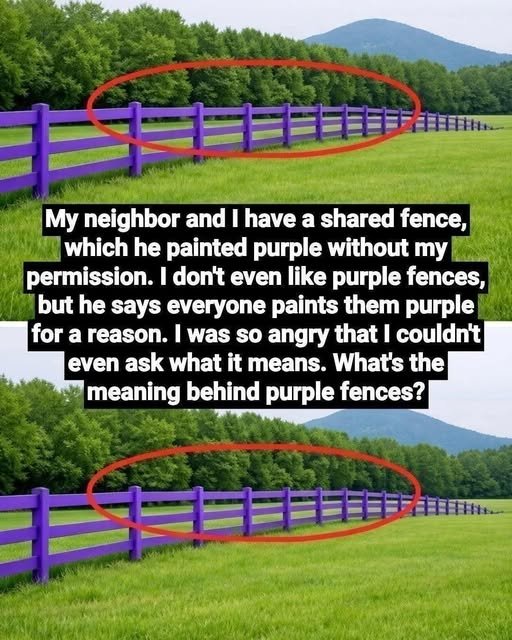
A purple fence might look like nothing more than an unusual landscaping choice—but in parts of the United States, purple paint can have a legal meaning.
In certain states, purple markings on trees, posts, or fences can serve as a form of “No Trespassing” notice. The exact rules, however, depend on state law, so a purple fence does not automatically mean the same thing everywhere. revisor.mo.gov
Why Purple?
The idea is surprisingly practical.
Instead of putting up signs every few feet, property owners in states with “purple paint laws” can use clearly visible purple markings to indicate that people should not enter the property.
For example, Missouri law allows owners or lessees to mark trees or posts with purple paint as notice against trespassing, provided the markings meet specific requirements regarding size, height, visibility, and spacing. revisor.mo.gov
Texas also recognizes purple paint as a legally recognized boundary marker for purposes of its trespass law. FindLaw
Does Every Purple Fence Mean “No Trespassing”?
No.
This is the part that viral social-media posts often leave out.
A property owner may simply choose purple because they like the color. And even in states that recognize purple paint as trespass notice, the law may specify where the paint must be placed, how large it must be, and how visible it must be.
So you shouldn’t assume that every purple fence you see has a legal meaning.
What If the Fence Is Shared?
This gets even more interesting.
In Missouri, for example, the law specifically addresses purple markings that are visible from both sides of a shared fence. Before applying certain purple markings visible from both sides, all owners or lessees must agree to the posting of their own property. revisor.mo.gov
That means the viral story about a neighbor painting a shared fence purple isn’t necessarily as simple as “purple means no trespassing.”
Property boundaries and shared-fence rights are separate legal issues.
Why Not Just Use a Sign?
Purple paint can be useful where signs are inconvenient, expensive, or easily damaged.
A long rural property, for example, may have a large amount of fencing or wooded boundary. A standardized paint marking can provide a visible indication without requiring a traditional sign at every location.
Some states have very specific requirements. Missouri’s statute, for example, specifies the dimensions, height, visibility, and spacing of purple markings. revisor.mo.gov
Is Purple Paint Used Everywhere in the U.S.?
No.
The rules are state-specific. Some states have enacted laws recognizing purple paint as a form of trespass notice, while others have considered or proposed similar legislation without necessarily adopting it.
For example, Kentucky legislative records show multiple proposals concerning the use of purple paint to provide trespass notice, illustrating why it’s important to check the law of the particular state rather than assuming the rule is nationwide. apps.legislature.ky.gov
What Should You Do If You See One?
If you’re walking, hiking, hunting, or exploring and encounter a clearly marked private property boundary, the safest approach is simple:
Don’t cross it unless you have permission or you know that you’re legally allowed to enter.
And don’t paint your own fence purple simply because you’ve seen the viral posts. If you’re using paint as a legal trespass notice, you should first check your state’s requirements.
The Bottom Line
That mysterious purple fence can have a real legal meaning—but not everywhere.
In states with applicable purple-paint laws, the markings can serve as a warning that the property is private and entry is prohibited. The requirements vary, so the color alone isn’t a universal legal code. revisor.mo.gov
Have you ever seen a purple fence and wondered why it was painted that color? Would you have known what it could mean? Tell us in the comments! 👇