A Simple Guide to Warts: What Actually Helps and What to Avoid
Warts are common skin growths caused by certain types of human papillomavirus (HPV). They can appear on the hands, feet, and other areas of the body, and many are harmless. However, not every bump or growth that looks like a wart is actually a wart, so it is important to be careful with home treatments. (Académie Américaine de Dermatologie)
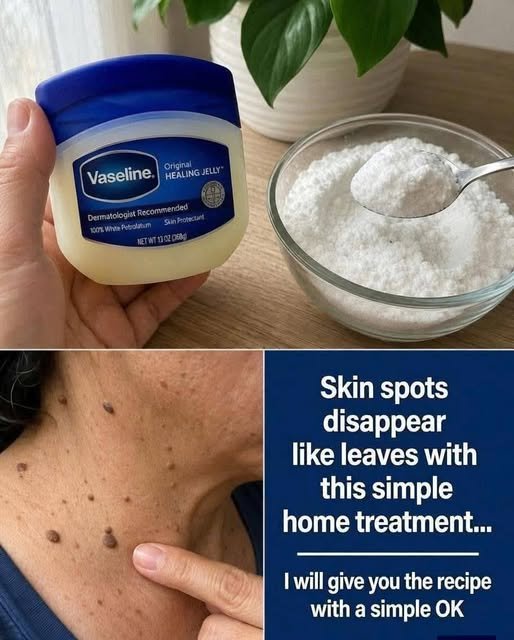
You may have seen social-media posts claiming that mixing petroleum jelly with household ingredients can make warts or skin growths “fall off like leaves.” There is not good medical evidence that this mixture removes warts, so it should not be presented as a proven treatment.
What Can Be Used at Home?
For one or a few small, confirmed common warts, dermatologists recognize several at-home options. One of the most established is salicylic acid, which gradually removes layers of the wart. Over-the-counter wart products may contain salicylic acid in liquids, gels, pads, or patches. (Académie Américaine de Dermatologie)
Another option is an at-home freezing product specifically designed for wart removal. These products are different from the freezing treatment performed by a dermatologist. (Académie Américaine de Dermatologie)
General Steps for Salicylic Acid
Soak the wart in warm water for about 5 minutes.
Dry the area carefully.
Apply the wart-removal product according to its package directions.
Continue treatment as directed, since warts generally do not disappear immediately.
Stop and seek medical advice if the surrounding skin becomes very irritated, painful, or develops significant bleeding or blistering. (Académie Américaine de Dermatologie)
Do not use wart-removal products on the face or genital area unless a healthcare professional specifically recommends them. People with diabetes, poor circulation, or reduced sensation in the area should also consult a healthcare professional before using salicylic acid. (Académie Américaine de Dermatologie)
Why You Shouldn’t Treat Every Skin Growth as a Wart
This is particularly important. Some conditions can look similar to a wart, including other benign skin growths. In some cases, skin cancer can also have a wart-like appearance. The American Academy of Dermatology recommends getting a professional evaluation if you are unsure what a growth is. (Académie Américaine de Dermatologie)
Seek medical advice if a growth:
Changes in appearance
Grows quickly
Bleeds
Becomes painful or itchy
Looks like an open sore
Keeps returning
Is located on the face or genitals
Does not respond to appropriate treatment
These signs do not automatically mean something serious, but they are reasons to have the area properly evaluated. (Académie Américaine de Dermatologie)
What About Petroleum Jelly?
Petroleum jelly is commonly used as a skin-protective moisturizer, but it should not be described as a proven wart-removal treatment. Likewise, household mixtures advertised online as ways to make warts disappear quickly should be approached cautiously unless there is reliable evidence supporting them.
If you want to try an over-the-counter wart treatment, choose a product specifically labeled for wart removal and follow its instructions rather than experimenting with potentially irritating ingredients.
Final Thoughts
Warts can take time to disappear, and there is no reliable overnight recipe that makes them simply “fall off.” Evidence-based options such as salicylic acid and appropriate freezing products can help with certain small warts, while persistent or uncertain skin growths should be evaluated by a healthcare professional. (Académie Américaine de Dermatologie)
Important: This article is for general educational purposes and is not a diagnosis or a substitute for personalized medical advice.