If your orchid is looking weak, losing leaves, or developing strange roots, don’t panic. Orchids often look unhealthy for reasons that are surprisingly easy to correct.
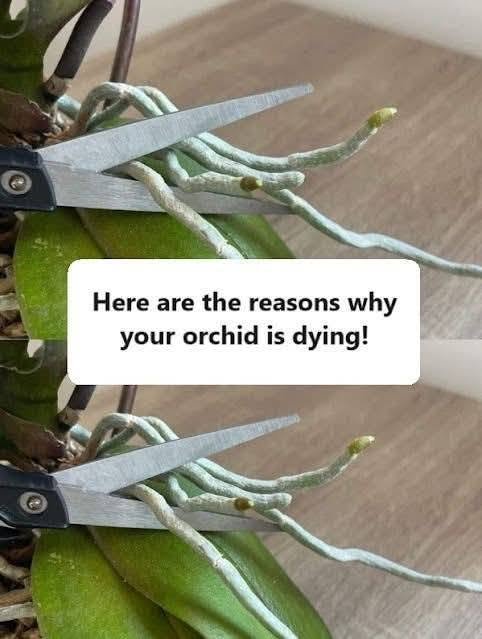
The roots shown in the image are especially important. They can tell you a lot about what is happening below the surface.
🌱 1. Not Every Orchid Root Should Be Cut
One of the biggest mistakes people make is cutting orchid roots simply because they look unusual.
Healthy orchid aerial roots can be:
Silver or gray when dry
Green after absorbing water
Firm and plump
Growing outside the pot
These roots are not automatically dead.
The image appears to show aerial roots, which are normal for many orchids, particularly Phalaenopsis orchids.
When Should You Cut a Root?
A root is more likely to be dead or severely damaged when it is:
Brown or black
Soft and mushy
Hollow or collapsing
Producing an unpleasant smell
Easily separating when gently touched
Healthy, firm roots should generally be left alone.
💧 2. Overwatering Is a Common Problem
Orchids don’t like sitting in constantly wet conditions.
When the potting medium stays wet for too long, roots can lose access to oxygen and may eventually rot.
Signs of possible root problems include:
Yellowing leaves
Soft or collapsing roots
A foul smell from the pot
Leaves becoming limp despite wet soil
Water remaining in the pot for prolonged periods
Rather than watering according to a strict calendar, check the plant and its growing medium.
🪴 3. The Potting Medium Matters
Most common orchids are epiphytes, meaning they naturally grow attached to trees rather than buried in ordinary garden soil.
That’s why orchid potting mixes are usually made from materials such as:
Orchid bark
Sphagnum moss
Perlite
Other coarse, well-aerated materials
Regular garden soil can hold too much moisture around orchid roots.
A container with good drainage is also important.
☀️ 4. Too Much or Too Little Light
Orchids need light, but many popular indoor orchids prefer bright, indirect light rather than intense direct afternoon sunlight.
Too little light can result in weak growth and poor flowering.
Too much direct sun can cause leaf scorching.
A bright location near a suitable window is often a better choice than placing the plant directly in harsh sunlight.
🌡️ 5. Temperature Stress
Sudden temperature changes can also stress orchids.
Avoid placing them directly beside:
Air-conditioning vents
Heating vents
Very cold windows
Radiators
Drafty doors
A relatively stable indoor environment is generally preferable.
✂️ 6. Don’t Prune Healthy Aerial Roots
Those long roots extending outside the pot can look messy, but they serve a purpose.
Orchid aerial roots can absorb moisture and nutrients from their surroundings and help the plant anchor itself.
Don’t cut them simply because they’re growing outside the pot.
If you need to repot the orchid, handle the roots gently rather than forcing them into the new container.
🍃 7. Check the Leaves
The leaves can provide additional clues.
Yellow lower leaf: Sometimes normal aging, although widespread yellowing can indicate a problem.
Wrinkled leaves: Can occur with dehydration, root damage or other stress.
Sunburn: May appear as pale, yellow or brown damaged patches after excessive direct sunlight.
Black or rapidly spreading spots: May require closer inspection because fungal or bacterial problems can sometimes affect orchids.
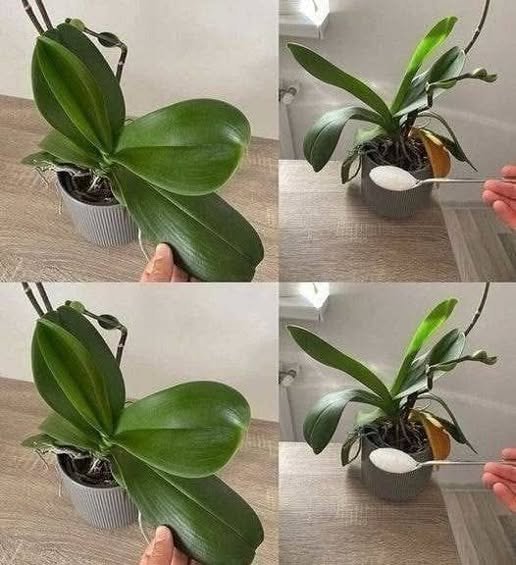
🌸 What Should You Do With the Orchid in the Photo?
Before reaching for the scissors, don’t cut those roots just because they look long or strange.
Instead:
Check whether the roots are firm.
Look for mushy, hollow or black roots.
Make sure the pot drains properly.
Check whether the growing medium stays wet for too long.
Provide bright, indirect light.
Water when the plant actually needs it rather than following a rigid schedule.
Remove only clearly dead or rotting tissue with clean, sterilized tools.
The Bottom Line
An orchid with long aerial roots isn’t necessarily dying.
In fact, those roots may be perfectly healthy.
The bigger warning signs are mushy or rotting roots, persistent overwatering, poor drainage, unsuitable light, temperature stress and problems affecting the leaves.
So before cutting your orchid’s roots, check them carefully—healthy roots deserve to stay. 🌿🌸