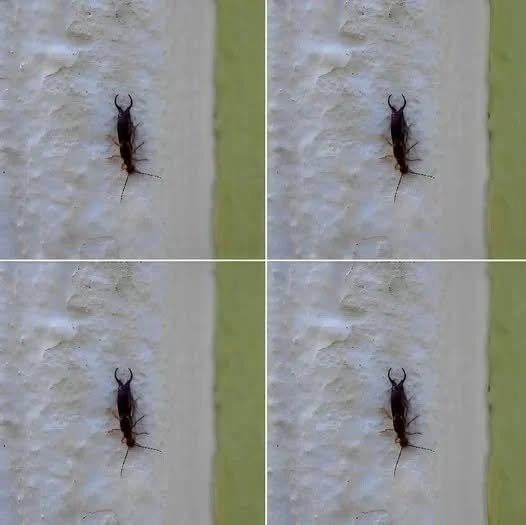
Seeing an unfamiliar insect crawling across a wall can be unsettling, especially when it has a dark body and those distinctive curved structures at the end of its abdomen.
The insect shown in the photograph appears to be an earwig, a small insect recognized by the pair of forceps-like appendages at the back of its body.
Despite their intimidating appearance, earwigs are generally considered harmless to people and are not known for spreading diseases in homes.
🪳 What Is an Earwig?
Earwigs are small insects belonging to the order Dermaptera. Their most recognizable feature is the pair of curved cerci, commonly called pincers or forceps, at the end of the abdomen.
These structures can look frightening, but earwigs generally use them for defense, mating, and handling food rather than attacking people.
They are also often active at night, which means homeowners may notice them when they suddenly appear on walls, floors, bathrooms, or other quiet areas.
Why Are Earwigs Coming Into the House?
Finding an earwig indoors doesn’t necessarily mean your home is dirty.
Earwigs generally prefer dark, cool, and damp environments. They may enter buildings through small gaps around doors, windows, foundations, pipes, or other openings.
You may be more likely to notice them when:
Outdoor conditions are very damp
There is excess moisture around the house
Doors or windows have gaps
Vegetation is growing close to the building
Leaves or organic debris accumulate near the foundation
There are cracks or openings around the exterior
So, if you suddenly notice several earwigs indoors, it can be useful to check for moisture and possible entry points.
Does One Earwig Mean You Have an Infestation?
Not necessarily.
Finding one earwig does not automatically mean that a colony has taken over your home. An individual insect may simply have entered from outdoors.
However, repeatedly finding them in different areas can be a reason to investigate where they are coming from.
Pay particular attention to damp areas such as:
Bathrooms
Basements
Laundry areas
Around sinks and plumbing
Areas near exterior doors
Spaces around windows
Are Earwigs Dangerous?
For most people, earwigs are more of a nuisance than a health threat.
Their pincers can look alarming, but they are not known for deliberately seeking out humans. If handled, an earwig may use its forceps defensively, but serious injury is uncommon.
The bigger concern in a home is usually why they are getting inside, rather than the insect itself.
How to Reduce Earwigs Around Your Home
If you want to make your home less attractive to earwigs, start with simple prevention measures.
1. Reduce Moisture
Repair leaking pipes, dripping faucets, or other sources of unnecessary moisture.
Good ventilation can also help keep damp rooms dry.
2. Seal Entry Points
Check around doors, windows, pipes, vents, and cracks in walls or foundations.
Weather stripping and appropriate sealants can help close potential entry points.
3. Keep the Exterior Tidy
Remove piles of leaves, damp organic material, and other debris from around the foundation.
If plants or mulch are directly against the building, creating a damp hiding place, consider keeping them farther away from exterior walls.
4. Check Before Using Insecticides
If you only occasionally see an earwig, chemical treatment may not be necessary.
Start with environmental measures such as reducing moisture and sealing openings. If you repeatedly find large numbers of insects, professional pest identification can help determine the appropriate treatment.
What About the Old “Earwig Crawling Into Your Ear” Story?
The name earwig has contributed to an old myth that these insects deliberately crawl into people’s ears.
There is no good evidence that earwigs specifically seek out human ears. Like other insects, one could accidentally enter an unusual location, but this is not their normal behavior.
Final Thoughts
If you find an insect like the one shown in the photograph, don’t panic. It appears to be an earwig, and its presence may simply indicate that the insect found a convenient way inside.
Rather than assuming that one insect means your home has a serious infestation, look for the conditions that attract them—particularly moisture, outdoor debris, and gaps around the building.
A few simple changes can often make your home less appealing to these nighttime visitors.
Have you ever found one of these insects in your home? 🪳