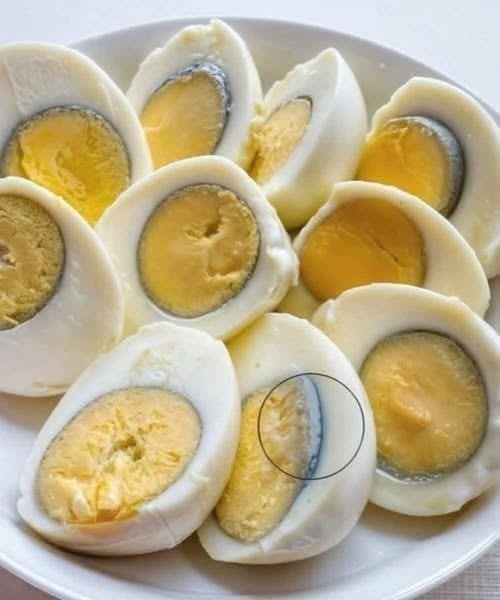
If you have ever sliced open a hard-boiled egg and noticed a green or grayish ring around the yolk, it can look strange at first. But in most cases, there is a simple explanation—and it usually does not mean the egg has gone bad.
🥚 What Causes the Green Ring?
The ring forms because of a chemical reaction between sulfur in the egg white and iron in the egg yolk.
When an egg is cooked for too long or at a temperature that is too high, hydrogen sulfide produced in the egg white can react with iron near the surface of the yolk. This creates ferrous sulfide, which has a characteristic greenish-gray color.
That’s why the discoloration appears exactly where the egg white meets the yolk.
Is a Green Ring Dangerous?
Generally, no.
A green-gray ring around an otherwise properly cooked egg is usually simply a sign of overcooking. The egg can still be safe to eat as long as it has been properly handled and stored.
The discoloration may affect the appearance and sometimes the texture of the egg, but it doesn’t automatically indicate spoilage.
Why Does It Happen More With Overcooked Eggs?
The longer an egg is exposed to heat, the more opportunity there is for the chemical reaction to occur.
You may notice a stronger green ring when:
Eggs are boiled for too long
The cooking temperature is excessive
Cooked eggs aren’t cooled promptly
Eggs are left sitting in hot water after cooking
This is why proper cooking and cooling can help prevent the discoloration.
How to Prevent the Green Ring
Try this simple method:
Place the eggs in a saucepan and cover them with cool water.
Bring the water to a boil.
Once boiling, cook the eggs according to your preferred hard-boiled method.
Remove them from the heat when they’re done.
Immediately transfer them to ice water or very cold water.
Allow them to cool thoroughly before peeling.
Rapid cooling helps stop the cooking process and can reduce the chance of developing that greenish ring.
What About the Gray or Blue Color?
The shade can vary from pale green to grayish-green or bluish-green, depending on the cooking conditions and the individual egg.
The important thing is to distinguish a cooking-related ring around the yolk from signs of actual spoilage.
If an egg has an unpleasant sulfurous smell, unusual texture, mold, or other obvious signs of spoilage, don’t eat it.
Final Thoughts
That strange green ring around a hard-boiled egg is usually nothing mysterious.
It is primarily the result of sulfur and iron reacting during cooking, especially when eggs are overcooked.
So if your perfectly normal hard-boiled egg has a greenish ring around the yolk, you don’t necessarily need to throw it away. Next time, simply avoid overcooking it and cool it quickly after cooking. 🥚💚
This article is for general food-information purposes. Proper refrigeration and safe food handling are still important when storing cooked eggs.